Johannesburg wore the night like it was borrowed — too sharp around the edges, too bright in the wrong places.
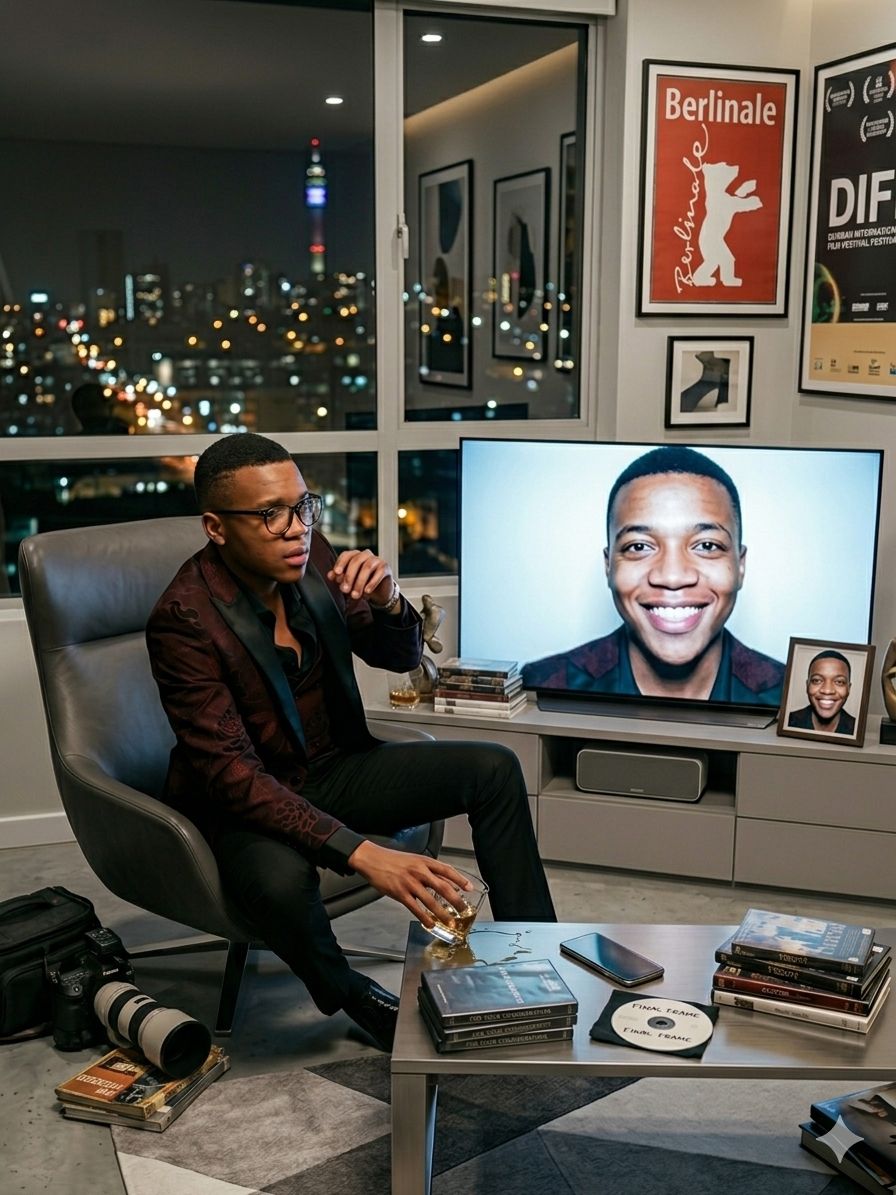
In a small flat above a laundromat in Melville, Thapelo Ramorobi sat in front of his television, the bluish glow painting him in the same cold hue as the city skyline outside.
He’d spent the day writing reviews for films that didn’t need them and answering PR emails that all sounded the same.
Then came the envelope.
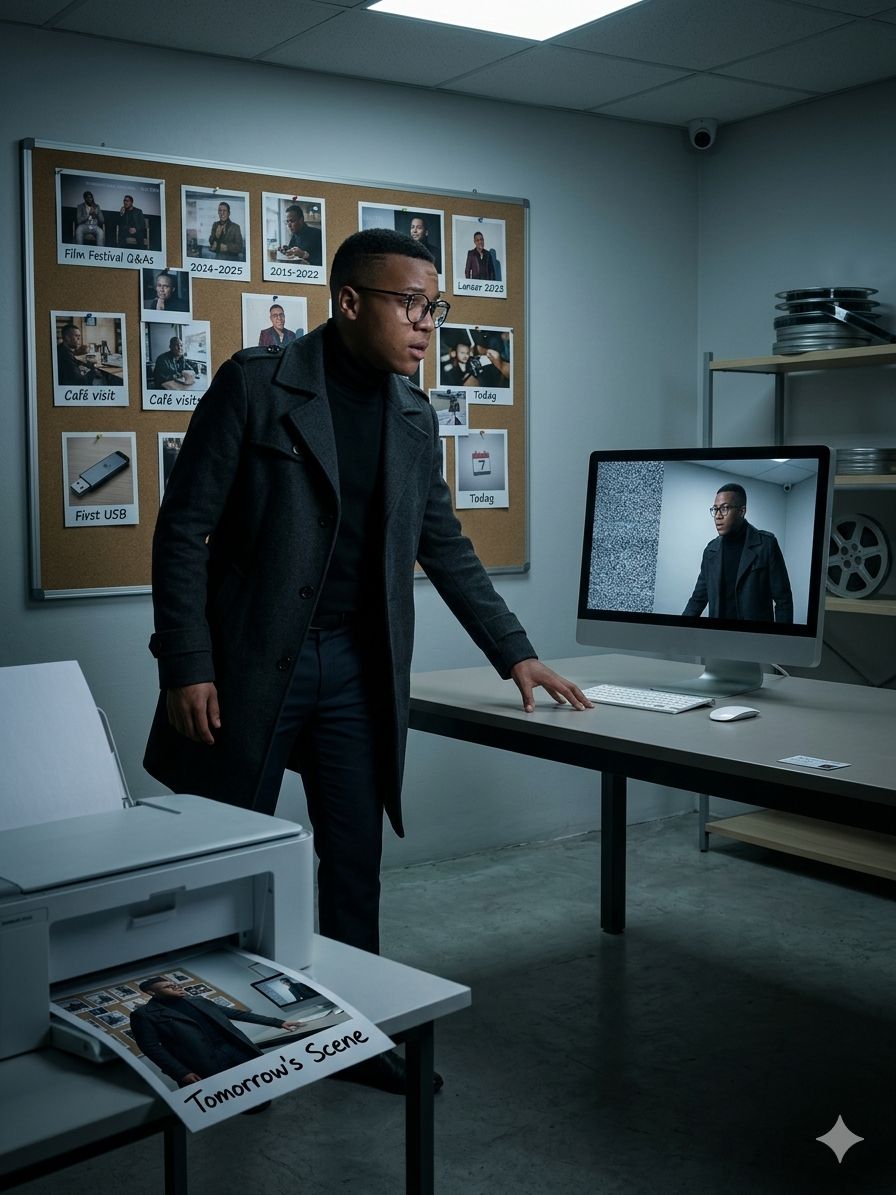
No courier, no return address — just Final Frame scrawled across the front in marker. Inside, a single USB drive.
He turned it over in his hand, the plastic slick against his fingers. There was no note, no logo, no NDA, which was strange — streaming platforms usually flooded you with disclaimers before you even got a password. Curiosity won, as it always did.
The TV flickered. The file opened.
And a film began to play.
—
It wasn’t the usual festival preview. No title card, no opening credits. Just a shaky handheld shot of a man sitting alone in a restaurant — familiar posture, same nervous tapping of the fingers. The camera lingered too long, and Thapelo’s chest tightened.
The man looked like him.
Not just a resemblance — the same jacket, the same scar above the eyebrow.
Thapelo leaned forward. The restaurant was somewhere in Braamfontein, he could tell by the mural on the wall. The sound was raw, as if recorded through a phone.
The man in the film ordered a drink.
Then looked straight into the camera.
And smiled.
—
He froze the frame. The timestamp read 22:17:04. He glanced at the wall clock.
22:17:04.
It wasn’t possible. He paused the video, and the man on screen paused too — but for half a second, Thapelo swore the man blinked after the image froze.
He sat back, heart beating too loudly for a critic’s living room.
This was either an elaborate prank or something else — something meant for him.
He replayed the file from the start. The cinematography was rough, but deliberate — whoever shot this knew framing. The color grading was subtle, washed-out tones that felt intentional, like the city had been drained of warmth.
Halfway through, the man in the film — his mirror — got up and left the restaurant. The camera followed him down the street until the streetlights thinned and the sound of crickets filled the silence. Then the man stopped, turned toward the lens again, and said:
“The review comes tomorrow.”
Cut to black.
—
Thapelo stared at his reflection on the TV screen. The line echoed in his mind — the review comes tomorrow.
He didn’t know whether to laugh or call someone.
Outside, a siren wailed in the distance, swallowed by the hum of traffic.
He ejected the USB, tossed it onto the coffee table, and poured a drink.
Maybe it was a student film. Maybe someone thought this was clever viral marketing. Still, something about the detail — the timing, the look — unsettled him.
He took out his phone, started to tweet about it, then stopped. Instead, he opened a new note and typed:
“Unmarked screener. Title unknown.
Film mirrors reality — literally.
Tomorrow = review?”
He stared at the blinking cursor.
Then, from the corner of the room, his TV powered on again by itself.
The same frozen frame.
Same man.
Only now, the image was smiling wider.