The USB was still warm when he pulled it from the port, as if it had a pulse.
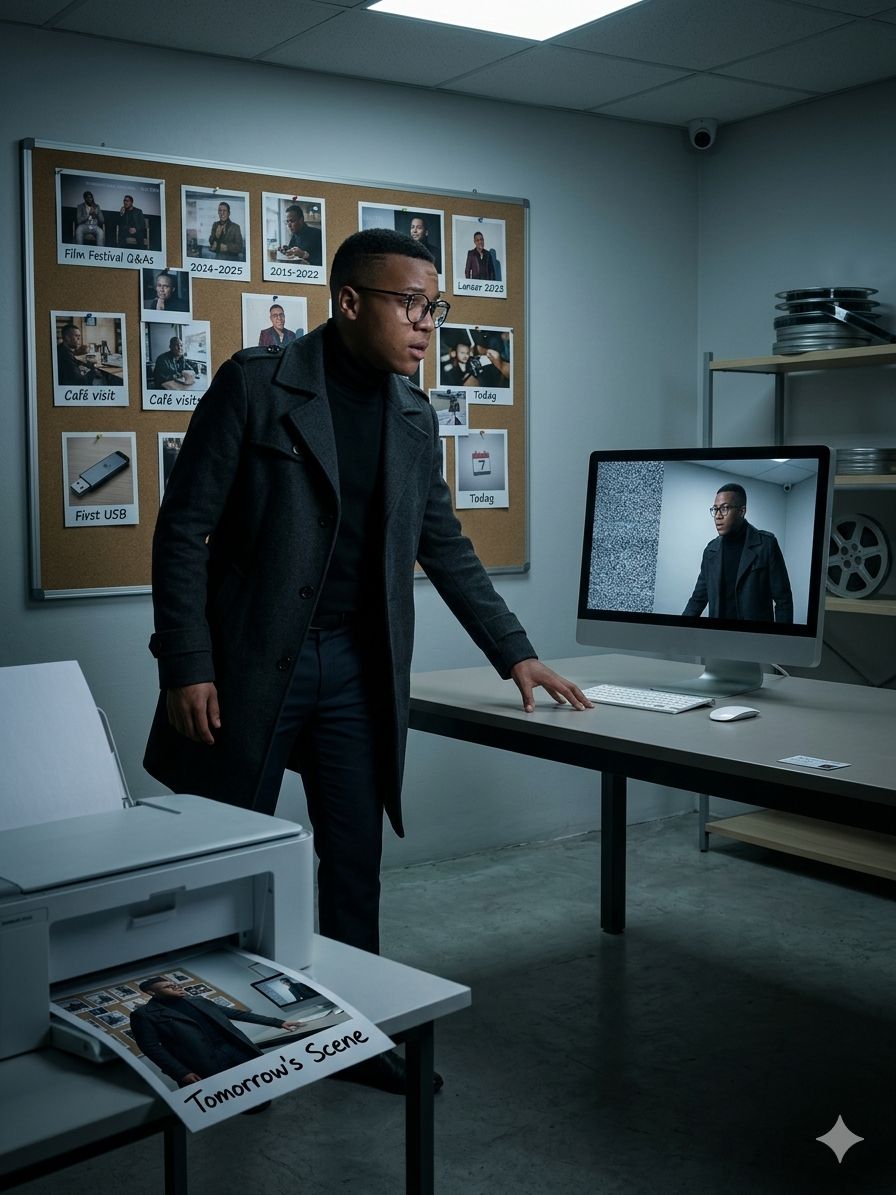
Thapelo placed it beside the first one on his desk, two small rectangles that had somehow hijacked his sense of reality.
He opened his notebook — the one he used for reviews — and flipped to a blank page. At the top, he wrote:
“What kind of film watches back?”
—
By morning, curiosity had beaten fear. He called in a favour from a friend — Sindi, a post-production editor who owed him one after he’d written a glowing review of her short film years ago.
They met at a small studio in Rosebank, walls lined with hard drives and posters of films that never made it to cinema.
“What are we looking at?” she asked, plugging in the USB.
“Something I wasn’t supposed to see,” he said.
The screen lit up, and the footage rolled — raw, timestamped, unfinished.
Sindi frowned. “This isn’t a screener. It’s a rough cut. Looks like dailies — raw takes from multiple cameras.”
She clicked through files. There were dozens of folders, each labelled by date. The earliest one read 2023_09_14 — over a year before he ever received it.
“Wait,” she said, zooming in on one frame. “That’s you, right?”
Thapelo nodded slowly. The shot showed him leaving a cinema, phone to his ear, carrying the same brown leather bag he’d bought six months after that date.
—
Sindi paused the video. “Whoever shot this, they’ve been filming you long before you got the USB.”
He swallowed hard. “Can you tell where it was recorded?”
She checked the metadata. “Some of it’s stripped, but one file still has GPS data — Maboneng.”
He stood. “I need to see that place.”
—
Maboneng in the late afternoon shimmered like a mirage — art galleries, vintage stores, rooftop bars, the usual pretense of creativity over concrete.
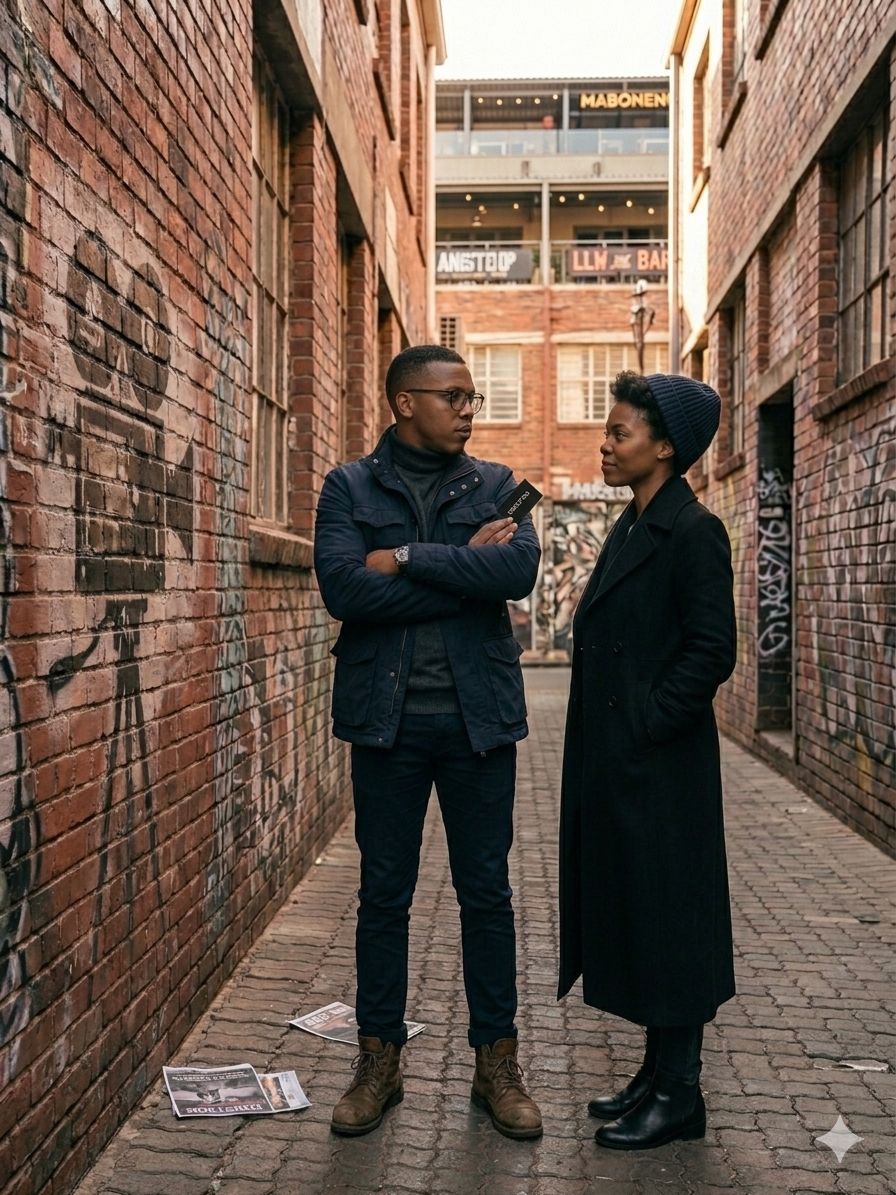
He found the alleyway from the footage: brick walls, graffiti, a faded stencil of a camera on one side. He raised his phone to take a photo.
“Nice angle,” a voice said behind him.
He turned. A woman stood there — the same voice from the call.
“You shouldn’t be here,” she said softly.
Thapelo took a step back. “Then tell me why I’m in your film.”
She smiled, a tired, knowing smile. “You’re not in the film, Thapelo. You are the film.”
He blinked. “What does that even mean?”
She reached into her coat pocket and pulled out a thin black card.
One side was blank. The other had a single word embossed in white:
DIRECTOR
She placed it in his hand.
“Tomorrow, you’ll understand the ending,” she said — and walked away.
—