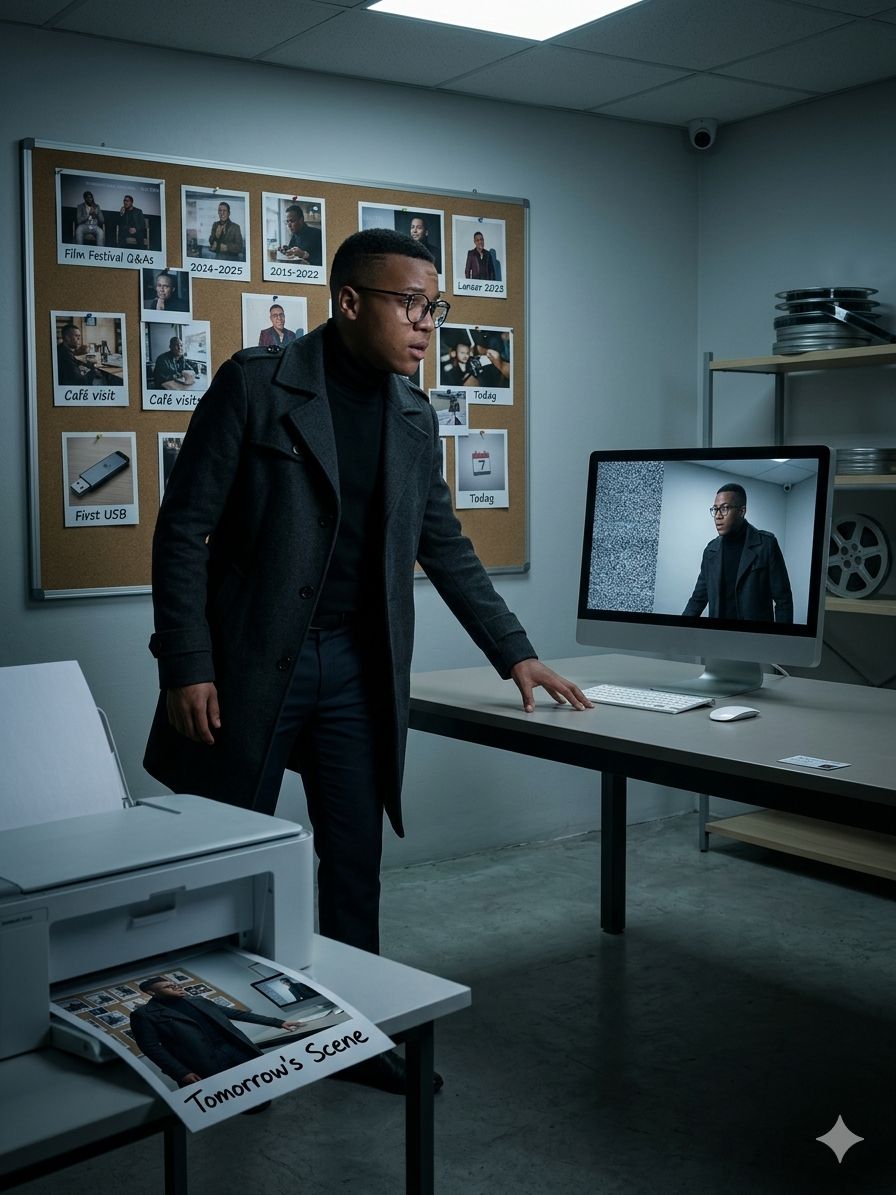
Morning arrived late in Melville. The city was already awake, but Thapelo’s flat looked hungover — empty coffee mugs, open tabs, the USB still lying where he’d left it.
He hadn’t slept much. Every time he closed his eyes, that frozen smile from the screen returned — the flicker of something human, but not quite.
He poured coffee, black, no sugar, and opened his laptop. His inbox was the usual clutter: press releases, invites, embargo reminders. He ignored them all and typed “Final Frame” into the search bar.
Nothing. No press kit, no teaser, no studio credit.
He checked his WhatsApp — film critics’ group chat, the usual chaos. Someone was ranting about the new Showmax series; another bragged about getting early access to a Netflix documentary. No one mentioned Final Frame.
So it wasn’t just another PR drop.
—
At noon, his phone buzzed with an unknown number.
He almost didn’t answer.
“Thapelo Ramorobi?” a woman’s voice asked. Calm. Measured.
“Yes.”
“You received something last night.”
He froze. “Who is this?”
“You shouldn’t have watched it.”
The line clicked dead.
He stared at the screen, pulse racing. He redialed, but the number was gone — no recent call. He checked the time: 12:01.
He looked back at the TV. Still off.
Then, a ping.
New email. No subject, no sender, just an attachment — Call_Sheet.pdf
He hesitated, then opened it.
It listed a single name under “Cast”:
RAMOROBI, THAPELO — ROLE: HIMSELF
And under “Location”:
BRAAMFONTEIN — TODAY — 12:30
—
He grabbed his jacket. The streets were hot and loud, taxis leaning on hooters, students streaming through with earbuds and iced coffees. Braamfontein was the city’s restless pulse — half art, half asphalt.
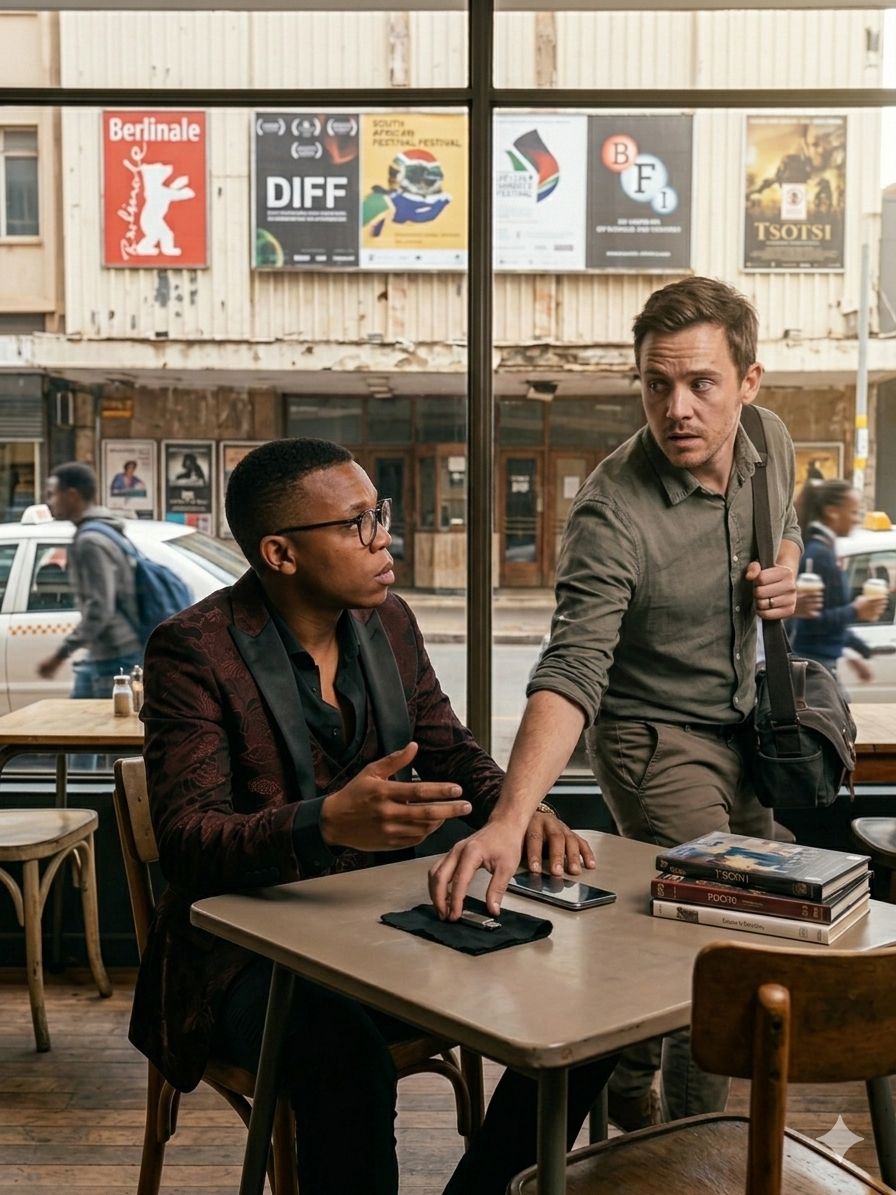
He followed the address on the call sheet to a small café opposite an old cinema that had been closed for years. The café’s window was plastered with festival posters — Berlinale, DIFF, BFI — most of which he’d actually covered.
Inside, it smelled like burnt espresso and nostalgia.
He ordered water and sat where he could watch the street. 12:29.
A man entered — early thirties, camera bag slung over his shoulder, eyes darting too much to be casual. He scanned the room and walked straight to Thapelo.
“You got it, didn’t you?” the man asked.
“The USB?”
He nodded.
“Who sent it?” Thapelo demanded.
The man exhaled, glancing toward the window. “You weren’t supposed to see yourself yet.”
“Yet?”
“It’s not finished.”
The man reached into his bag, pulled out another USB drive wrapped in a piece of black cloth. “This one ends differently,” he said, placing it on the table. “But you didn’t get it from me.”
Before Thapelo could reply, the man was already walking out.
—
That night, he sat in the same spot, drink in hand, USB in port.
The screen blinked to life. The new file began with the same restaurant scene — his double, same gestures, same everything. But this time, the man stood up midway, looked offscreen, and said:
“You’re late.”
Then someone stepped into frame.
Thapelo froze.
It was the man from the café.
The two shook hands. The audio crackled, but one line came through clear:
“We’re almost done filming the critic.”