For more than a century, Warner Bros has been one of the pillars of cinematic identity — a studio whose logo alone evokes the smell of popcorn, the weight of legacy, and the promise of a story worth telling. As a film critic, watching whispers of its possible sale turn into billion-dollar bidding wars feels less like business news and more like a plot twist in a Hollywood epic.
But this time, the stakes aren’t fictional. They’re financial, cultural, and global.
The Battle for Warner Bros: Netflix vs Paramount
Two giants are circling the studio like apex predators:
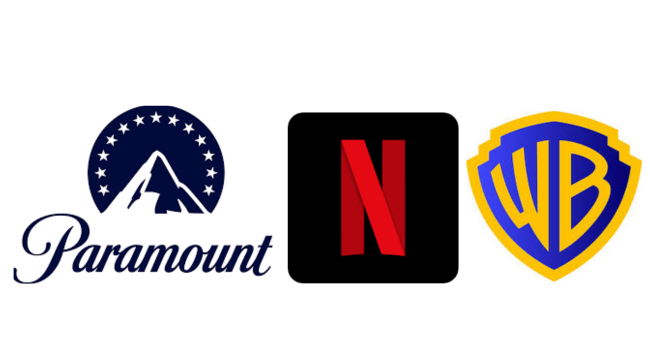
- Netflix has gone in with an offer valued at US$82.7 billion, targeting the crown jewels — Warner’s film and TV studios, and its streaming operations. Their proposal mixes cash and stock, a sign that Netflix isn’t just buying content — it’s buying influence.
- Paramount responded like a rival character entering the third act: with a dramatic US$108.4 billion hostile bid for the entire Warner Bros Discovery empire. Not just the studios — the networks, the channels, the legacy infrastructure, everything.
As a critic, it’s fascinating watching how these bids reveal two very different visions of the future of entertainment.
Netflix wants to rule streaming. Paramount wants to reassemble the old Hollywood machine. Both want Warner Bros because… who wouldn’t? It’s one of the last true giants left.
The Cultural Cost: What Happens When the House That Built Batman, Harry Potter and HBO Changes Hands?
Warner Bros isn’t just a studio. It’s a cultural engine.
A sale of this magnitude risks becoming the most disruptive event in modern entertainment. We’ve already seen what corporate turbulence can do: films cancelled, franchises paused, entire creative departments wiped out in restructuring. Now imagine that on a global scale.
And Then There’s South Africa — The Forgotten Casualty
While headlines focus on Wall Street, Hollywood, and streaming wars, South Africa quietly stands on the brink of its own fallout.
With Warner Bros Discovery’s distribution deal with MultiChoice set to expire on 31 December 2025, and renewal talks reportedly stalled, South Africa could lose several Warner-owned channels — including Discovery, Cartoon Network, TNT Africa, HGTV and more — on 1 January 2026.
And here’s the twist:
A sale to either Netflix or Paramount could make these negotiations even more difficult. If Netflix wins, it may prefer pushing South Africans toward Netflix subscriptions rather than keeping channels on DStv. If Paramount wins, it may reshuffle or rebrand networks entirely. Either way, DStv — and millions of households — may feel the tremors first.
From a Critic’s Lens: What This Means for Storytelling
For those of us who live through stories, review them, debate them, and write about them, this moment is more than corporate chess. It’s about artistic survival.
- Will streaming monopolies compress creative risks?
- Will franchise-driven decision-making overshadow fresh voices?
- Will African audiences lose access to global content?
- Will Warner Bros become a logo under someone else’s algorithm?
These are not small questions. These are the questions that shape the next decade of film.
The Final Frame — For Now
What happens next may define what movies look like, how they’re distributed, and who gets to watch them.
But the irony is poetic:
A studio that has given us some of cinema’s greatest stories is now trapped inside one — a sprawling corporate thriller, complete with rival bidders, billion-dollar stakes, and global consequences.
And like any gripping blockbuster… we don’t yet know how it ends.